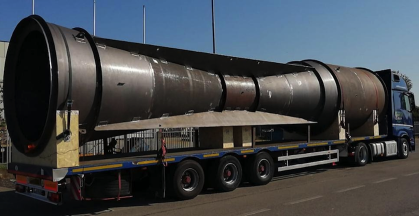
Mechanism: A Venturi tube creates a pressure differential in a fluid flow to introduce and mix gas into the liquid, forming microbubbles.
Equipment: Venturi tubes and fluid flow systems.
Efficiency: Moderate to high gas transfer efficiency; depends on flow rate.
Commercial Viability: Common in industrial applications, scalable.
Reference: Rodrigues, R. O., et al. (2018). Journal of Micromechanics and Microengineering.
Sparging
Mechanism: In this method, gas is passed through a sparger or diffuser with fine pores, creating microbubbles as the gas percolates through the liquid.
Equipment: Spargers or diffusers, gas supply systems.
Efficiency: Efficient in gas transfer; variable bubble size distribution.
Commercial Viability: Widely used in biotechnology and wastewater treatment.
Reference: Van't Riet, K., & Tramper, J. (1991). Basic Bioreactor Design.
Mechanical Agitation
Mechanism: Stirring or agitating a gas-liquid mixture vigorously can produce microbubbles.
Mechanism: This technique involves oscillating the fluid flow to create shear forces that generate microbubbles. It is known for its ability to produce a high concentration of uniform microbubbles
Equipment: Fluidic oscillators and flow control systems.