Quick Answer: Ozone (O3) plays three primary roles in municipal water treatment systems: it acts as a powerful primary disinfectant, an oxidizer that removes taste, odor, color, iron, manganese, and emerging contaminants, and a pretreatment step that reduces disinfection byproduct (DBP) formation downstream. Ozone in municipal water treatment systems has an oxidation potential of 2.07 volts, more than 50% higher than chlorine, and reacts up to 3,000 times faster. It inactivates chlorine-resistant pathogens like Cryptosporidium and Giardia in seconds, decomposes back into oxygen with no chemical residue, and is generated on-site from air and electricity. More than 2,000 municipal installations worldwide and 42 of the 50 U.S. states use ozone in their drinking water systems. Most modern plants pair ozone for primary disinfection with a small chlorine or chloramine residual to maintain protection through the distribution network.
Municipal water treatment systems face growing pressure to deliver safe, clean drinking water. Aging infrastructure, tighter regulations, and emerging contaminants all create challenges that traditional methods struggle to solve. Ozone has become one of the most effective tools available to improve municipal water treatment systems and protect public health, which is why adoption continues to expand across utilities of every size.
What Is Ozone and How Does It Work in Municipal Water Treatment Systems?
Ozone is a triatomic form of oxygen (O3) and one of the strongest oxidizing agents available for water treatment. Its oxidation potential of 2.07 volts exceeds chlorine by more than 50%, and ozone reacts up to 3,000 times faster than chlorine in water. Purifico’s overview of how ozone is produced and reacts in water covers the underlying chemistry in detail.
Municipal water treatment systems generate ozone on-site using electricity and ambient air or oxygen feed gas. An ozone generator passes the gas through a high-voltage corona discharge that splits O2 molecules and recombines them into O3. The system then injects that gas into the water supply, where it oxidizes pathogens and contaminants in seconds. Once ozone completes its work, it decomposes naturally back into ordinary oxygen and leaves no chemical residue.
This process differs from chlorine-based disinfection in a meaningful way. Chlorine reacts with natural organic matter to form regulated byproducts and carries through to the consumer’s tap. Ozone does its job and disappears.
Why Municipalities Are Adopting Ozone in Municipal Water Treatment Systems
Cities and utilities across North America are integrating ozone into municipal water treatment systems for several converging reasons.
Superior Disinfection Performance
Ozone destroys a broad range of waterborne pathogens, including bacteria, viruses, protozoa like Giardia and Cryptosporidium, and amoebae. Many of these organisms resist chlorine at standard dosing levels, which makes ozone a critical tool for facilities that must meet strict public health standards. Microorganisms cannot develop resistance to ozone because its mechanism is direct cellular oxidation rather than a biochemical pathway, so disinfection performance stays consistent over time.
Elimination of Taste and Odor Issues
Unpleasant taste or odor ranks among the most common complaints from municipal water customers. The compounds geosmin and 2-methylisoborneol (MIB), released by algae blooms, are the usual culprits, and conventional treatment struggles to remove them. Ozone targets these molecules directly, neutralizing them and producing water that tastes and smells clean. For utilities sourcing from reservoirs prone to seasonal blooms, ozone in municipal water treatment systems often pays for itself in reduced complaint volume alone.
Reduction of Disinfection Byproducts
Chlorine-based treatment can produce trihalomethanes (THMs) and haloacetic acids (HAAs), both regulated by the EPA under the Stage 2 DBP Rule. Long-term exposure to these compounds carries health concerns. Because ozone breaks down DBP precursors before chlorine is added downstream, integrating ozone significantly reduces the formation of these regulated compounds and helps utilities stay in compliance.
Effective Removal of Emerging Contaminants
Contaminants of emerging concern (CECs) increasingly affect municipal water supplies, including pharmaceuticals, personal care products, and industrial chemicals like 1,4-dioxane. Traditional treatment methods often fail to address them. Ozone’s strong oxidizing properties break down complex organic molecules that other disinfectants cannot touch, which is why ozone in municipal water treatment systems is often the chosen response when emerging contaminant testing turns up positive.
Iron, Manganese, and Sulfur Oxidation
Groundwater sources often contain elevated levels of iron, manganese, and sulfur that cause discoloration, metallic taste, and foul odors. Ozone oxidizes these elements into insoluble forms that standard filtration easily removes, improving both the appearance and quality of treated water in a single step. For a deeper look at the underlying mechanism, see Purifico’s reference on ozone water purification chemistry and methods.
How Ozone Integrates Into Municipal Water Treatment Systems
Ozone fits into multiple stages of the treatment process. The right placement depends on each facility’s source water, regulatory targets, and existing infrastructure.
Pre-Oxidation
Pre-oxidation is the most common application of ozone in municipal water treatment systems. Operators introduce ozone early in the process, before coagulation and filtration, to break down organic matter, reduce color, oxidize iron and manganese, and begin pathogen inactivation. Pre-oxidation reduces coagulant demand and improves filter performance downstream.
Intermediate Ozonation
Intermediate ozonation places the ozone contact stage between sedimentation and filtration. Many facilities pair this approach with biologically active filtration, which uses microbial action to remove the biodegradable byproducts ozone oxidation creates. This combination is one of the most effective treatment trains for difficult source water.
Final Polishing
Final polishing applies ozone at the end of the treatment process to eliminate any remaining contaminants, tastes, or odors before distribution. Most municipal water treatment systems using final polishing also dose a small chlorine or chloramine residual after the ozone stage so that disinfection protection carries through the distribution network.
Ozone vs. Chlorine in Municipal Water Treatment Systems
Chlorine has served as the standard disinfectant in municipal water treatment systems for over a century. It is inexpensive, easy to dose, and provides the residual protection needed for distribution networks. However, ozone outperforms chlorine in primary disinfection and oxidation by a wide margin, and Purifico’s reference on ozone disinfection compared to chlorine and other disinfectants lays out the full side-by-side detail.
Ozone reacts faster and more completely with a broader range of pathogens, does not produce THMs or HAAs, eliminates taste and odor compounds that chlorine cannot touch, and leaves no chemical residue in treated water. The tradeoff is straightforward: ozone does not provide lasting residual disinfection. Most municipal water treatment systems solve this by using ozone for primary treatment and following with a low dose of chlorine or chloramine for distribution. This combined approach cuts overall chemical usage while delivering better results than chlorine alone.
The Cost Advantage of Ozone in Municipal Water Treatment Systems
The upfront equipment cost of an ozone system can exceed a basic chlorination setup, but long-term economics typically favor ozone in municipal water treatment systems. Utilities that adopt ozone reduce spending on chemical procurement, transport, storage, and handling. They no longer need to purchase or stockpile hazardous chemicals like liquid chlorine or sodium hypochlorite.
Ozone systems also require less day-to-day maintenance than many traditional treatment methods. Operating costs come down primarily to electricity, with modern oxygen-fed generators consuming around 7 to 10 kWh per kilogram of ozone produced. Over the lifespan of the system, these savings compound. Facilities managing high chemical costs or frequent taste and odor complaints stand to benefit the most.
Regulatory Compliance and Public Confidence
Water quality regulations continue to tighten at both the state and federal levels. The EPA sets maximum contaminant levels for a growing list of substances under the Safe Drinking Water Act, and recent rules on PFAS set enforceable limits of 4 parts per trillion for PFOA and PFOS. Utilities that fail to meet these standards face penalties, costly corrective actions, and loss of public trust.
Ozone helps facilities stay ahead of these requirements. It removes regulated contaminants effectively, reduces DBP formation, and addresses emerging concerns before they become compliance issues. Communities that invest in ozone in municipal water treatment systems also see measurable improvements in public perception of water quality, which builds long-term confidence in the local supply. Utilities that want a structured framework for monitoring ozone performance can review Purifico’s guidance on ozone dosage and ORP control in water treatment.
A Growing Trend in Municipal Water Treatment Systems
Municipal water treatment systems have used ozone since the late 1800s, but adoption has accelerated significantly in the past two decades. More than 2,000 municipal installations worldwide now rely on ozone, and 42 of the 50 U.S. states have ozone-based systems in service. Adoption rates continue to climb as equipment costs drop and the technology reaches more small and mid-sized utilities.
For decades, only large-scale plants adopted ozone. That has changed. Advances in system design, smaller footprints, and lower entry-level costs have opened the door for smaller municipalities. Turnkey ozone systems simplify installation and offer remote monitoring that makes ongoing management straightforward.
Purifico Ozone’s Approach to Municipal Water Treatment Systems
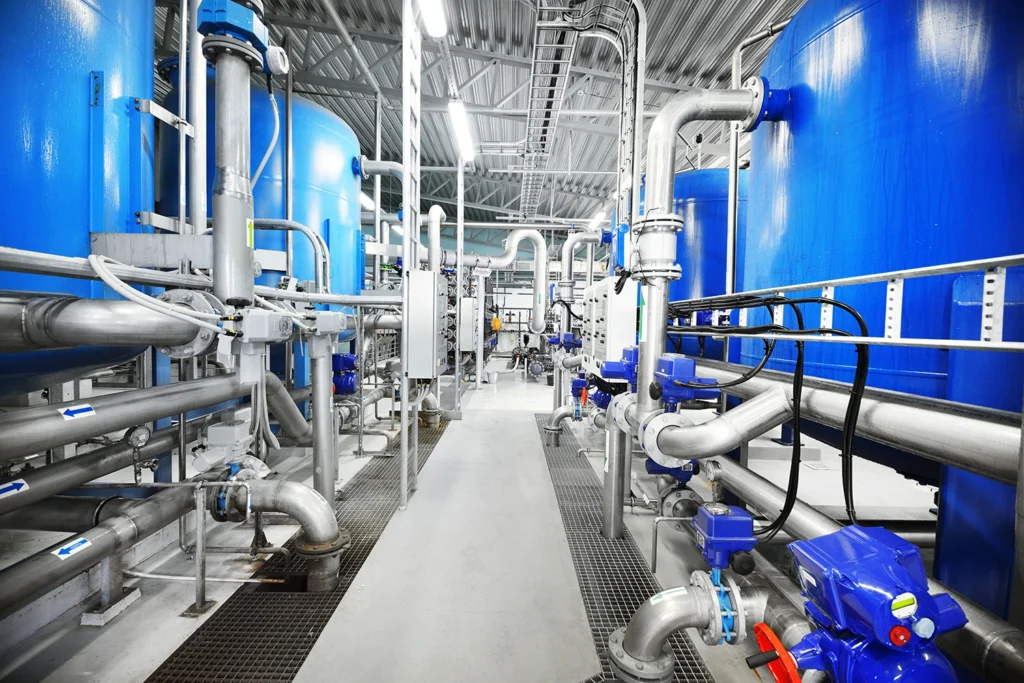
Purifico Ozone designs and manufactures systems built for demanding high-volume ozone water treatment applications. Every system runs on electricity and ambient air or oxygen to produce ozone on-site, with engineering focused on durability, efficiency, and ease of operation.
For municipal applications, Purifico offers scalable ozone water treatment systems for municipal use ranging from compact cabinet units to high-volume skids that treat up to 250 gallons per minute and produce up to 95 pounds of ozone per day. Every system includes advanced monitoring through the proprietary remote ozone system monitoring and management platform, giving operators real-time visibility into system performance from anywhere. Operators concerned about handling and exposure can also reference Purifico’s overview of ozone safety considerations for water treatment operators.
Whether your municipality is upgrading an aging treatment process, solving persistent taste and odor complaints, or preparing for stricter regulations, Purifico Ozone delivers the technology and support to make the transition straightforward.
Frequently Asked Questions About Ozone in Municipal Water Treatment Systems
How does ozone disinfect water in municipal systems?
Ozone disinfects by oxidizing the cellular structures of bacteria, viruses, and protozoa. The reaction takes seconds, after which ozone decomposes back into oxygen. Because the mechanism is physical oxidation rather than a biochemical attack, microorganisms cannot develop resistance.
Is ozone safe for drinking water?
Yes. Ozone has been used in drinking water treatment since the late 1800s, is approved by the EPA as a primary disinfectant, and decomposes into oxygen with no chemical residue. Treated water is safe to consume once dissolved ozone has fully reacted, typically within minutes.
What is the half-life of ozone in water?
The half-life of dissolved ozone in clean water at room temperature is roughly 20 to 30 minutes, and shorter in warm or organically loaded water. This is why ozone is excellent for primary disinfection at the plant but is usually paired with a chlorine or chloramine residual for distribution protection.
Can ozone fully replace chlorine in municipal water treatment systems?
In primary disinfection and oxidation, yes. In a typical municipal distribution system, no. Long pipe runs require a residual disinfectant that ozone cannot provide on its own, so most utilities use ozone for primary treatment and a small chlorine or chloramine dose for residual.
What is the largest contaminant ozone removes that chlorine cannot?
Chlorine-resistant protozoa like Cryptosporidium and Giardia are the most consequential. Ozone inactivates them in seconds at typical municipal doses. Chlorine cannot achieve the same kill at standard concentrations, which is why utilities sourcing from surface water increasingly add ozone for protozoa control.
Sources
- U.S. Environmental Protection Agency. Safe Drinking Water Act. epa.gov/sdwa
- U.S. Environmental Protection Agency. Stage 1 and Stage 2 Disinfectants and Disinfection Byproducts Rules. epa.gov/dwreginfo/stage-1-and-stage-2-disinfectants-and-disinfection-byproducts-rules
- U.S. Environmental Protection Agency. Long Term 2 Enhanced Surface Water Treatment Rule. epa.gov/dwreginfo/long-term-2-enhanced-surface-water-treatment-rule
- U.S. Environmental Protection Agency. PFAS National Primary Drinking Water Regulation. epa.gov/sdwa/and-polyfluoroalkyl-substances-pfas
- Centers for Disease Control and Prevention. Drinking Water Treatment. cdc.gov/drinking-water/about/water-treatment.html
- Centers for Disease Control and Prevention. Water Disinfection with Chlorine and Chloramine. cdc.gov/drinking-water/about/water-disinfection-with-chlorine-and-chloramine.html
- Lenntech. Comparison of Disinfectants Used in Water Treatment. lenntech.com/library/ozone/comparison/comparison-disinfectants.htm
- Oxidation Technologies. Municipal Water Treatment with Ozone. oxidationtech.com/applications/water-treatment/municipal-water.html
- NSF International. NSF/ANSI Standard 60 for Drinking Water Treatment Chemicals. nsf.org