Purifico

Comparing Disinfectants

Ozone leads the way in defending against water-borne pathogens like bacteria, fungi, and viruses. Pound-for-pound, ozone outperforms other chemicals due to its strong oxidizing power. Plus, it leaves no toxic residues, allowing operators to use whatever amount is needed to get the job done. With other chemicals, toxic residues are produced which constrains dosage, allowing certain pathogens to evade destruction. When it comes to safeguarding your crops or livestock from water-borne pathogens, Purifico ozone products provide unparalleled protection and peace of mind. 

Quick Answer

Ozone outperforms chlorine, chloramine, chlorine dioxide, and UV on both oxidizing power and CT values, which is why it clears pathogens that other disinfectants leave behind. Ozone sits at 2.07 V oxidation potential against 1.36 V for chlorine and 0.95 V for chlorine dioxide. It also leaves no toxic residue, so operators can dose what the water actually needs and keep recycling that water instead of dumping it.
Which Disinfectant Has the Most Oxidative Power?

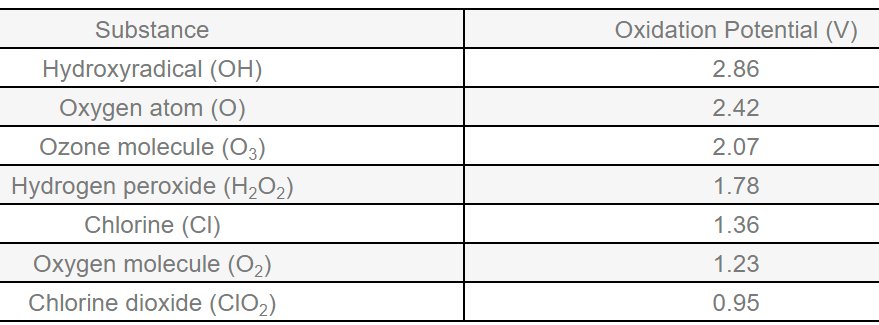
Oxidation Potential is measured in volts (V) and measures the tendency for a chemical species to gain electrons. As shown below, ozone is a more powerful oxidant than other disinfectants like peroxide, chlorine or chlorine dioxide.


Substance

Oxidation Potential (V)

Hydroxyradical (OH)

2.86

Oxygen atom (O)

2.42

Ozone molecule (O3)

2.07

Hydrogen peroxide (H2O2)

1.78

Chlorine (Cl)

1.36

Oxygen molecule (O2)

1.23

Chlorine dioxide (ClO2)

0.95

How Do CT Values Compare Across Disinfectants?

Ozone is the most powerful disinfectant, and is the best assurance against tough-to-treat pathogens. The tables below compares common water treatment systems and provides the CT values (read more about CT values) needed with each method to eliminate benchmark microorganisms. The dosages needed for disinfection vary with different temperatures, but ozone remains the best disinfectant in all conditions. The CT values are listed in mg*min/L for treatment at 20°C. UV dosage is provided for reference. Since UV cannot disinfect systemically like chemicals can, it provides relatively poor disinfection on its own. 

Source: U.S. EPA (1991) Guidance Manual for Compliance with the Filtration and Disinfection Required for Public Water Systems Using Surface Water Sources, U.S. Environmental Protection Agency, Washington, D.C.

Viruses

CT values for 99.99% disinfection

Ozone

0.5

Chlorine Dioxide

12.5

Free Chlorine

3

UV

186 (mJ/cm)

Chloramine (99.90% inactivation)

746

Viruses are easily destroyed by ozone. To achieve the same results, you will need approximately…

  • 25 times more chlorine dioxide
  • 6 times more free chlorine
  • 1500 times more chloramine

Cryptosporidium

CT for 99.90% disinfection

Ozone

0.72

Chlorine Dioxide

15

Free Chlorine

68

UV

11 (mJ/cm)

Chloramine (99.90% inactivation)

1100

Cryptosporidium are a type of disease-causing protozoa. They are easily destroyed by ozone but not other disinfectants. To achieve the same results, you will need approximately…

  • 20 times more chlorine dioxide
  • 100 times more free chlorine
  • 1500 times more chloramine

Giardia Cysts

CT for 99.90% disinfection

Ozone

12

Chlorine Dioxide

347

UV

12 (mJ/cm)

Giardia cysts are a disease-causing type of protozoa. Compared to ozone, more than 10 times as much chlorine dioxide is needed for its disinfection.

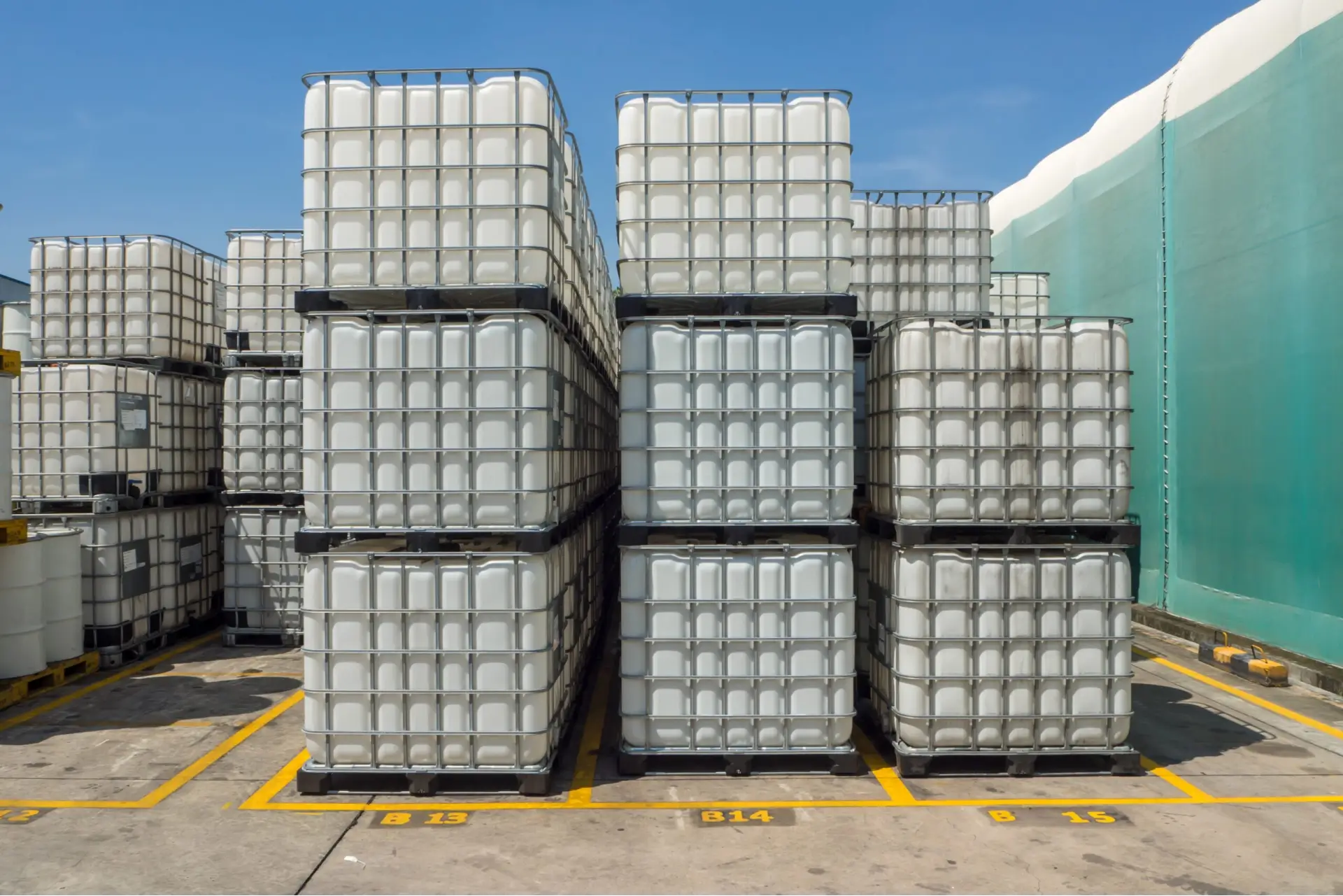
Tanks of Chlorine Dioxide
Incomplete Disinfection

Is Chlorine Dioxide Enough to Control Plant Pathogens?

Chlorine dioxide (ClO2) is a popular disinfectant used to treat agricultural water. Chlorine dioxide is a fairly good option overall, but pathogen removal is likely to be incomplete for certain organisms such as fusarium or for removal of plant viruses . This method also leads to the build-up of chloride in irrigation water which can be harmful to plants and impede water recycling.

Residuals and Limited Recycling

How Does Electrolyzed Water Compare With Ozone?

Electrolyzed water is a system that aims to produce hypochlorous acid (HOCl), which is an oxidizer and sanitizer.

The hypochlorous acid is produced through the electrolysis of salt (NaCl) or hydrochloric acid (HCl).

Hypochlorous acid is useful for disinfecting water, but has some disadvantages compared with ozone:

Not Stand-Alone

Can UV Disinfection Work on Its Own?

Many producers recirculate their clean water through UV irradiation to kill microbes in solution. Since UV light is only able to kill microbes where it makes contact with them, this does not offer protection from microbial growth on the surface of your tanks and plumbing. UV radiation is a good way of reducing the microbial load circulating in solution, but is not the best choice as a stand-alone solution because it isn’t effective against all pathogens and will not completely eradicate them.

A diverse community of microbes coexisting, showcasing the intricate web of life at the microscopic level and highlighting the importance of biodiversity in ecosystems.
a scientist looking at a vial of water for testing

Why Does Free Chlorine Fall Short on Plant Pathogens?

Studies have found that the amount of free chlorine levels needed to inactivate plant pathogens such as F.oxysporum is higher than phytotoxic thresholds.  In other words, certain pathogens can’t be eliminated because the amount of disinfectant needed would be toxic to crops.   In contrast, research shows that achievable working concentrations of ozone (~1.5ppm) yield 100% inactivation of F.oxysporum spores in less than a minute.  Our personal experience backs up this science; after installation of Purifico ozone systems, our customers see drastic reductions in microbial counts on their water quality reports (typically complete elimination of detectable microbes).

Oxidation Potential of Common Disinfectants Oxidation Potential of Common Disinfectants Higher volts means stronger oxidizing power Hydroxyl radical (OH)2.86 V Oxygen atom (O)2.42 V Ozone (O3)2.07 V Hydrogen peroxide1.78 V Chlorine1.36 V Oxygen molecule (O2)1.23 V Chlorine dioxide0.95 V

Common Questions About Comparing Disinfectants

Which water disinfectant is the strongest?

By oxidation potential, the hydroxyl radical leads at 2.86 V, followed by atomic oxygen at 2.42 V and ozone at 2.07 V. Among practical disinfectants, ozone is the strongest, well ahead of hydrogen peroxide at 1.78 V, chlorine at 1.36 V, and chlorine dioxide at 0.95 V.

How much more chlorine does it take to match ozone?

Using published CT values for 99.99 percent virus inactivation at 20 degrees Celsius, it takes roughly 6 times more free chlorine, 25 times more chlorine dioxide, and 1500 times more chloramine than ozone. For Cryptosporidium the gap is wider still, with free chlorine needing about 100 times the CT value of ozone.

Why do residuals matter for irrigation water?

Chlorine-based products leave chloride and sodium behind. Those residuals build up in recycled irrigation water, damage sensitive crops, and limit how many times water can be reused. Ozone reverts to oxygen, so dose is set by what the water needs rather than by residue limits.

Is UV a good stand-alone option?

UV reduces the microbial load moving through the lamp, but it only works where the light reaches the water. It does nothing about biofilm on tank walls and plumbing, and it is not equally effective against all pathogens. It works best alongside a systemic oxidizer.

What about electrolyzed water?

Electrolyzed water produces hypochlorous acid on site and does disinfect. The tradeoffs are sodium or chloride residuals, limits on water recycling, incomplete control of some plant pathogens, and a high upfront cost for generators.

Can chlorine kill Fusarium in irrigation water?

Research indicates the free chlorine level needed to inactivate pathogens such as Fusarium oxysporum sits above the phytotoxic threshold for crops. Ozone reaches full inactivation at working concentrations near 1.5 ppm without harming plants.

Sources

OrganizationReference
U.S. Environmental Protection AgencyGuidance Manual for Compliance with Filtration and Disinfection Requirements for Public Water Systems Using Surface Water Sources (1991)
International Ozone AssociationComparative disinfection performance of ozone and alternative oxidants
Health CanadaGuidelines for Canadian Drinking Water Quality: chlorine, chloramine and ozone technical documents
Canadian Council of Ministers of the EnvironmentCanadian Water Quality Guidelines for the Protection of Agricultural Water Uses