FAQ
Frequently Asked Questions
Common questions from municipal utilities, industrial operators, and environmental engineers evaluating ozone disinfection.
Why choose ozone over chlorine for wastewater disinfection? +
Ozone is approximately 3,000 times more effective than chlorine as a disinfectant and acts 25 times faster. Unlike chlorination, ozone does not produce regulated disinfection byproducts such as trihalomethanes (THMs) or haloacetic acids (HAAs), eliminating the dechlorination step and the associated compliance risk. Ozone also removes color, odor, and micropollutants that chlorine cannot address.
Can ozone remove pharmaceuticals and micropollutants from wastewater? +
Yes — this is one of ozone's most significant advantages over other disinfection technologies. Through direct ozonation and the generation of hydroxyl radicals (advanced oxidation), ozone breaks down endocrine-disrupting compounds, antibiotics, hormones, personal care products, and other trace organic contaminants that pass through conventional treatment processes largely intact.
Does ozone leave harmful residuals in the discharge? +
No. Ozone naturally reverts to oxygen, leaving no chemical residual in treated effluent. This is a significant advantage over chlorination, which requires dechlorination to meet discharge permit limits for residual chlorine. Ozone-treated water can be discharged directly or reused without additional chemical neutralization.
At what stage in the treatment process is ozone applied? +
Ozone is typically applied as a tertiary treatment step, after primary and secondary treatment has reduced suspended solids and biochemical oxygen demand. For advanced applications, it can be combined with biological activated carbon (BAC) or sand filtration. In some industrial applications, ozone is also used upstream for pretreatment to reduce toxic load before biological stages.
How is ozone generated for wastewater applications? +
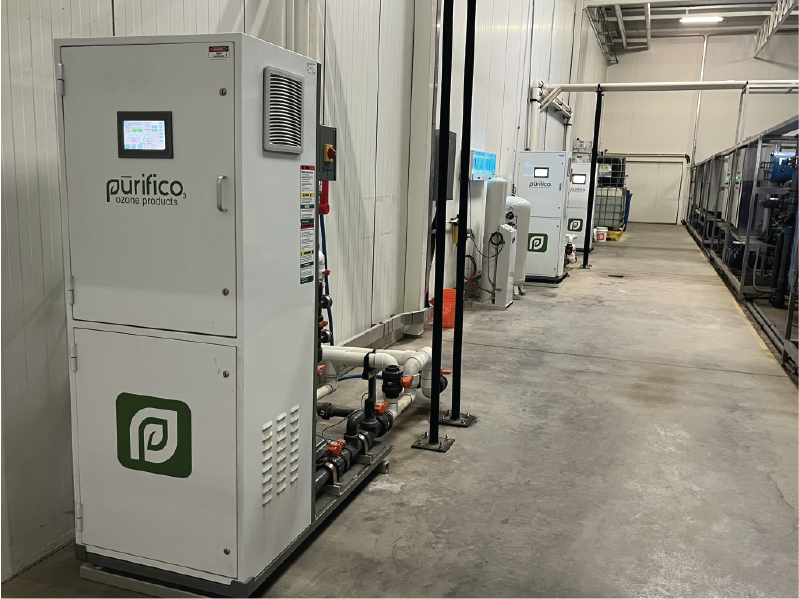
Ozone is generated on-site from oxygen or dry air using corona discharge generators. On-site generation eliminates the need to store or transport hazardous chemicals, which simplifies regulatory compliance and reduces safety risk. Purifico systems include integrated generation, dissolution, and monitoring in a single packaged unit.
Can ozone systems handle variable flow rates at a wastewater plant? +
Yes. Purifico systems are designed to modulate ozone output in response to flow rate and water quality changes. Automated controls maintain target CT values (concentration x contact time) across variable influent conditions, ensuring consistent disinfection performance through peak and off-peak flow periods.
What are the typical energy requirements for ozone wastewater treatment? +
Energy consumption depends on ozone output and feed gas type. Oxygen-fed systems are approximately 40% more efficient than air-fed systems. Modern corona discharge generators produce ozone at 6–12 kWh per kilogram of ozone. While energy cost is higher than UV on a per-treatment basis, the elimination of chemical procurement, dechlorination, and byproduct management typically results in a lower total cost of operation over the system lifetime.