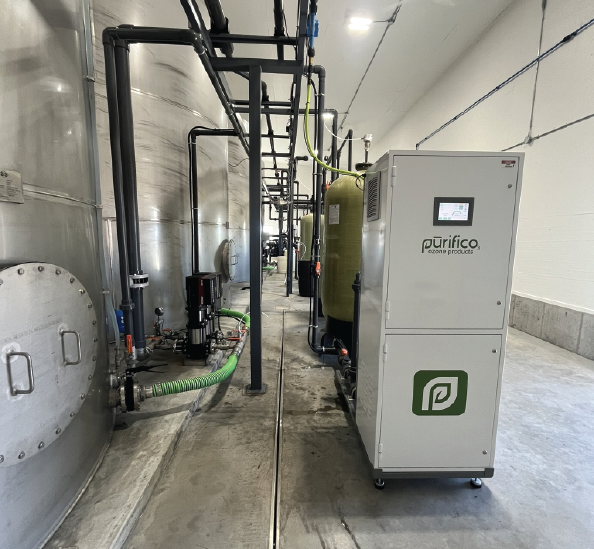
Ozone water treatment is a powerful and effective solution for the bottling industry. It ensures water purity, enhances product quality, and is environmentally friendly. Discover the key advantages of integrating ozone technology into your bottling process.
Municipal or spring water enters the treatment system for purification
Step 2
Ozone Generation
On-site ozone generators produce ozone and dissolve it into the water supply
Step 3
Water Treatment
Ozone eliminates bacteria, viruses, and contaminants with no chlorine or chemical additives
Step 4
Line Sanitization
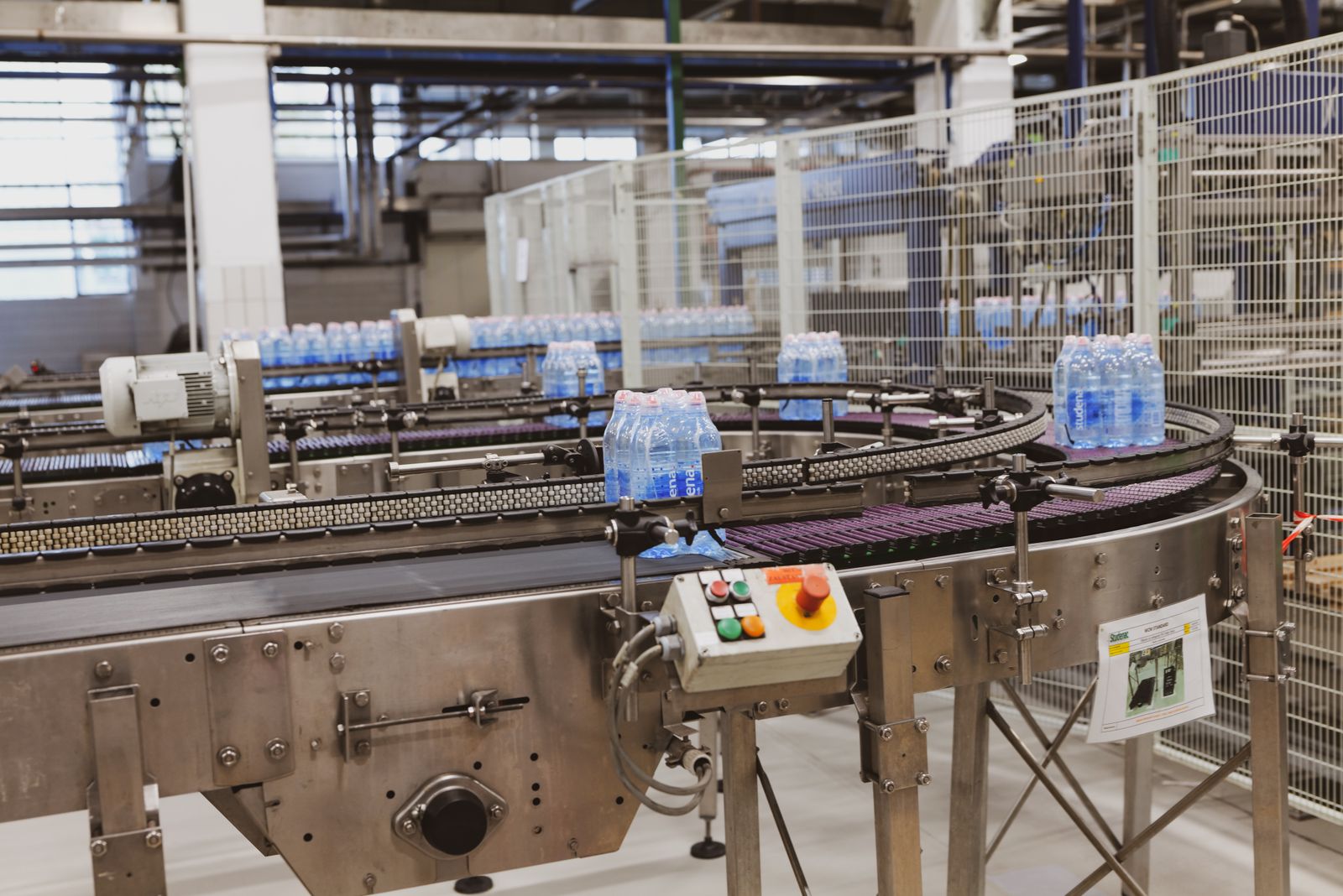
Ozone sanitizes bottles, caps, and fill lines to meet FDA and NSF standards
Step 5
Fill & Seal
Purified water is filled and sealed as ozone reverts to oxygen, leaving zero residue
How Ozone Treats Bottled Water
Final Disinfection
Ozone (O₃) is the final disinfection step in most bottled water plants because it works fast and leaves no chemical taste behind. Dissolved into product water just ahead of the filler, ozone inactivates bacteria, viruses, and protozoa on contact, protecting the water as well as the inside of every bottle and cap it touches. Once the bottle is sealed, the remaining ozone reverts to oxygen, so consumers get clean water with nothing added. That pairing of strong ozone disinfection and zero residue is why ozonation has become the standard finishing step for spring, purified, and mineral water brands.
What Ozone Removes from Source Water
Source water for bottling can carry more than microbes. Well and spring sources often contain dissolved iron and manganese, hydrogen sulfide, and naturally occurring organics, while municipal feed water can bring taste and odor compounds of its own. Ozone oxidizes iron and manganese into particles that filters can capture, destroys the sulfur compounds behind rotten egg odors, and breaks down the organic matter that feeds bacterial regrowth. Applied ahead of filtration, it also lightens the load on carbon beds and cartridge filters, extending their life and keeping product water consistent from batch to batch.
Ozone for Taste, Odor, and Clarity
Customers judge bottled water by taste first, and ozone protects it. By oxidizing the organic compounds and metals that cause off flavors, musty odors, and slight discoloration, ozone produces water that is crisp, clear, and neutral. Unlike chlorine, it does not add a flavor of its own, and because it breaks down into oxygen, nothing lingers in the bottle. The result is a more consistent product across production lines, water sources, and seasons, which is exactly what a brand needs to build repeat buyers.
Controlling Bromate in Ozonated Water
Responsible ozonation also means managing bromate. When source water contains natural bromide, too much ozone can convert it to bromate, which the FDA limits to 0.010 mg/L in bottled water. The answer is precise control, not avoiding ozone. Paired with dissolved ozone and ORP monitoring, a Purifico system lets operators dose only what the water needs, and plants with high bromide sources can adjust contact time and pH to keep bromate well under the limit. Routine source water testing rounds out a program that keeps every bottle both safe and compliant.
How Ozone Sanitizes Bottles, Caps, and Lines
Ozone does more than treat product water. The same ozonated water can rinse bottles and caps before filling, sanitize storage tanks and fill lines, and support clean-in-place (CIP) cycles between production runs. Because ozone is generated on site and leaves no residue, there is no chemical sanitizer to rinse away afterward, which saves water and shortens changeovers. For bottlers running multiple shifts, running ozonated water through the lines during production and rinse cycles keeps biofilm from taking hold and holds microbial counts down between scheduled cleanings.
Key Benefits of Ozone in Water Bottling
Superior Disinfection
Ozone kills bacteria, viruses, and protozoa faster than chlorine and leaves no residue in the finished water.
Better Taste and Clarity
Ozone oxidizes the compounds behind off tastes, odors, and haze, producing crisp, neutral water customers notice.
Chemical-Free Process
Generated on site from air or oxygen, ozone reverts to oxygen after treatment, so there is nothing to store, handle, or rinse away.
Regulatory Compliance
Ozone supports FDA and IBWA expectations for bottled water with a proven disinfection step that is simple to monitor and document.
Applications in Water Bottling
Ozone for Spring and Mineral Water
Spring and mineral water brands depend on the natural character of their source, and ozone protects that character without changing it. Applied after filtration, ozone disinfects the water and the inside of every container while leaving dissolved minerals like calcium and magnesium untouched. It also controls the iron, manganese, and sulfur compounds common in spring and well sources, so the product stays clear and odor free. Because ozone adds nothing to the water, your label can keep promising exactly what is in the bottle.
Ozone for Purified and Bulk Water Plants
Purified water made by reverse osmosis or distillation still needs protection from the moment it leaves treatment to the moment it is sealed. Ozone disinfects storage tanks and product water, keeps biofilm out of distribution lines, and protects large format containers such as 18.9 L (5 gallon) jugs that are returned and refilled. For bulk and home delivery operations, ozonated rinse water sanitizes returned jugs quickly, and its short life means containers can be filled and shipped without waiting on chemical residuals to clear.
Partner with Purifico Ozone
Purifico Ozone builds ozone systems sized to your production volume, from small private label lines to high-speed regional plants. Our team helps you set the right dose for your source water, integrate ozone with your filler, rinser, and CIP circuits, and add the monitoring that makes audits easier. The result is safer water, lower sanitation chemical costs, and a system that scales as your brand grows. Contact Purifico Ozone today to find the right ozone setup for your bottling line.
Side by Side
Ozone vs. Traditional Water Bottling Sanitization
Feature
Ozone (Purifico)
Chlorine / Chlorine Dioxide
UV
Heat Sanitization
Microbial Kill Rate
99.999%
99.9%
99.99%
99.99%
Chemical Residue in Product
None
Yes
None
None
Line & Surface Sanitization
During flow and CIP
Periodic CIP only
Water only
Periodic
Taste & Odor Impact
Improves product
Can impart taste
Neutral
Minimal
Biofilm Prevention
Excellent
Moderate
None
Limited
Regulatory Acceptance
FDA / NSF 60
FDA approved
FDA approved
FDA approved
Operating Cost
Low
Medium
Low
High (energy)
Proven Results
What Bottling Operations See After Ozone Installation
Ozone-based treatment delivers measurable, verifiable results for bottling operations, from the source tank to the sealed bottle.
99.999%
Microbial kill rate on bacteria, viruses, and protozoa in product water
0
Chemical sanitizer residue left in the finished bottle
40%
Reduction in sanitation chemical and labor costs reported
3-in-1
Disinfects, deodorizes, and decolourizes water in a single treatment step
Overall Sanitization Effectiveness
Ozone (Purifico)
99%
UV Treatment
78%
Chlorine Dioxide
71%
Heat Sanitization
65%
Find Your Fit
Recommended Systems for Water Bottling
System selection depends on production volume, bottle format, and whether line sanitization is required alongside product treatment.
Not sure which system fits your line? Request a free consultation. Our team will size a solution to your production volume.
FAQ
Questions from Water Bottling Operators
Answers to the most common questions from bottled water producers evaluating ozone treatment.
Yes. Ozone is approved by the FDA as a direct food contact substance and is recognized as GRAS (Generally Recognized As Safe) for bottled water treatment. It is compliant with NSF/ANSI Standard 60 for drinking water treatment chemicals and is widely used by leading bottled water brands globally.
No. Ozone has a half-life of approximately 20 minutes in water and reverts to oxygen. By the time bottles are filled, capped, and sealed, residual ozone has fully dissipated. Finished product contains no ozone and no chemical byproducts.
Yes. This is one of ozone's key advantages over UV in bottling applications. Ozonated water sanitizes the surfaces it contacts as it flows, including tanks, pipes, valves, fill heads, and bottle interiors. This significantly reduces biofilm risk and eliminates the need for periodic chemical CIP cycles in many operations.
Ozone improves taste and odor quality by oxidizing organic compounds responsible for earthy, musty, or chemical notes. Finished ozone-treated water is consistently rated as cleaner and fresher than water treated with chlorine-based methods.
UV is effective at inactivating microorganisms in the water column but provides no residual protection and does not sanitize surfaces. Ozone treats the water and simultaneously sanitizes every surface the water contacts, helping protect against biofilm recontamination along the production line while the water is moving.
In many bottling operations, ozone significantly reduces or replaces the frequency of chemical CIP cycles by limiting biofilm formation whenever ozonated water is running through the line. The extent of replacement depends on your specific line configuration, throughput, and regulatory requirements. Purifico's team assesses each facility individually to determine the optimal integration approach.
Purifico systems are designed to support compliance with FDA 21 CFR Part 129 (processing and bottling of drinking water), NSF/ANSI 60, IBWA model code requirements, and applicable ISO and GMP standards. Our team provides documentation support for facility audits and regulatory submissions.
Ozone Technology
Integrating ozone technology into your bottling water treatment process ensures a high-quality, safe, and sustainable product. Embrace the advantages of ozone to enhance your bottling operations and deliver the purest water to your consumers.