Purifico

Chloramine vs Chlorine

Ozone leads the way in defending against water-borne pathogens. When comparing chloramine vs chlorine, neither matches the oxidative power of ozone. Pound-for-pound, ozone outperforms both, leaving no toxic residues and delivering complete pathogen control that chloramine and chlorine alone cannot achieve.

Primary Disinfectant

What Is Chlorine in Water Treatment?

Free chlorine (Cl2) is the baseline disinfectant for many municipal and commercial water systems worldwide. Added as gas, liquid hypochlorite, or solid calcium hypochlorite, it dissolves in water to form hypochlorous acid (HOCl), the active killing agent.

Chlorine's oxidation potential is 1.36 V, giving it strong, fast-acting kill rates against many bacteria and viruses. The tradeoff: it dissipates quickly, generating trihalomethanes (THMs) and haloacetic acids (HAAs) as regulated disinfection byproducts. Both are tied to long-term health concerns under Stage 2 DBPR.

Water treatment system
Scientist filling up beaker with water for testing

Secondary Disinfectant

What Is Chloramine Water Treatment?

Chloramine is not an element. It forms when free chlorine reacts with ammonia, most commonly as monochloramine (NH2Cl), at a 5:1 chlorine-to-ammonia ratio. US utilities first deployed chloramine water treatment in 1929 to extend residual reach in large distribution systems.

Chloramine's extended stability is its key advantage. Its key disadvantage: an oxidation potential of 0.75 V, roughly half of free chlorine, making it a far weaker primary disinfectant. It also creates a different set of DBPs and introduces nitrification risk through ammonia release.

Chemical Comparison

Chloramine vs Chlorine: Key Differences at a Glance

When comparing chloramine and chlorine, the tradeoff is fundamental: free chlorine is a stronger oxidant with better kill rates, while chloramine trades disinfection power for longer residual stability in distribution. That single tradeoff defines everything from CT requirements to DBP formation to downstream risk.

FactorFree ChlorineChloramine
Oxidation Potential (V)1.360.75
Primary Regulated DBPsTHMs, HAAsNDMA, iodo-DBPs
Residual StabilityHours to daysDays to weeks
CT for 99.99% Virus Kill (mg-min/L)3746
Effective vs CryptosporidiumPartially (high CT)Not effective alone
Nitrification RiskNoneYes
Downstream Equipment RiskLowHigh (rubber seals, lead)
  • Chloramine requires 249x more contact time than free chlorine to inactivate 99.99% of viruses
  • Chloramine cannot effectively destroy Cryptosporidium at any practical dose
  • Despite weaker disinfection, chloramine introduces different regulated DBPs (NDMA) that carry their own compliance burden

Chloramine vs Chlorine CT Values at a Glance

CT values measure the product of disinfectant concentration (C) and contact time (T) needed to inactivate a target organism. The figures below come from U.S. EPA guidance for surface water treatment at 20 degrees C.

Source: U.S. EPA (1991) Guidance Manual for Compliance with the Filtration and Disinfection Required for Public Water Systems Using Surface Water Sources.

Viruses

DisinfectantCT (99.99% inact.)
Ozone0.5
Free Chlorine3
Chloramine746
  • Chloramine requires ~250x more contact time than free chlorine
  • Ozone is 6x more effective than free chlorine against viruses

Cryptosporidium

DisinfectantCT (99.90% inact.)
Ozone0.72
Free Chlorine68
Chloramine1,100
  • Chloramine requires ~16x more contact time than free chlorine
  • For a commercial operator, this translates directly into tank sizing and chemical costs

Giardia Cysts

DisinfectantCT (99.90% inact.)
Ozone12
Free Chlorine68
ChloramineNot effective alone

Chloramine struggles against Giardia cysts and typically requires paired treatment or alternative disinfection to hit target log reductions.

Residuals and Distribution Reach

Why Chloramine Water Treatment Gained Ground

Chloramine's appeal is practical: it maintains measurable residuals across long distribution systems without the rapid decay free chlorine experiences.

  • Chloramine residual lasts days to weeks vs. hours for free chlorine
  • Lower THM and HAA formation makes it easier to meet DBPR limits at the tap
  • Roughly one in five Americans currently drinks chloraminated water
  • The EPA and Health Canada allow chloramine as a secondary disinfectant in treated distribution systems
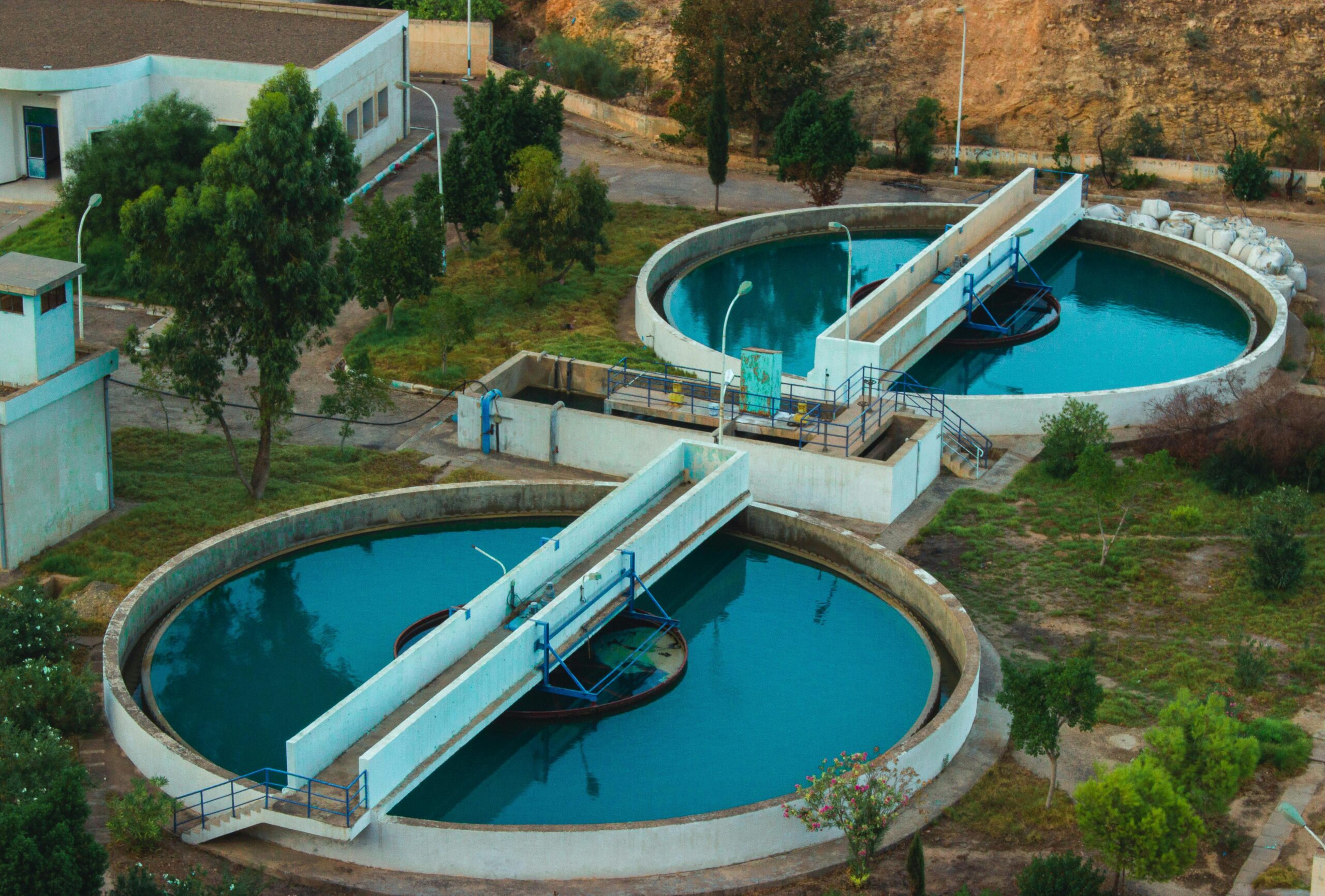
Two large circular pools used for water treatment

Operational Risks

Hidden Costs of Chloramine Water Treatment

Chloramine's stability comes with significant downstream costs that utilities and operators often underestimate until they show up in operations budgets or compliance reports.

RiskMechanismImpact
NitrificationAmmonia release feeds nitrifying bacteriaNitrite spikes, biological regrowth
Lead and Copper LeachingDisrupts protective scale in older pipesHigher lead levels at tap
Rubber DegradationAttacks EPDM seals and gasketsAccelerated infrastructure replacement
Dialysis RiskCannot be removed by standard water filtrationRequires special treatment for medical facilities
NDMA FormationReacts with organic precursorsProbable human carcinogen (regulated in CA)
Water surface with rising air bubbles

Not Stand-Alone

Where Ozone Fits in the Chloramine vs Chlorine Decision

Ozone is extremely effective for primary disinfection, and avoids the toxic disinfection by-products associated with chlorine. As a significantly stronger oxidant, ozone will oxidize contaminants that chlorine and chloramine cannot, and it will kill even the hardiest of microorganisms. By pre-oxidizing the water with ozone, the dosage of chloramine or chlorine can be severely reduced, dosing only the amount required for line maintenance without relying on chemicals for primary treatment.

DisinfectantOxidation (V)CT 99.99% Virus
Ozone (O3)2.070.5 mg-min/L
Free Chlorine1.363 mg-min/L
Chloramine0.75746 mg-min/L
  • Ozone eliminates Cryptosporidium; neither free chlorine nor chloramine can match it at practical doses
  • No chemical residuals means no DBP formation at the point of treatment
  • Purifico ozone systems have delivered complete elimination of detectable microbes on customer water quality reports after installation

Making the Right Call

Choosing Between Chloramine and Chlorine

The chloramine vs chlorine decision turns on your system's specific needs: distribution length, source water characteristics, regulatory environment, and downstream equipment. Neither is a universal answer.

  • Long distribution systems may benefit from chloramine's extended residual
  • Systems with older infrastructure should weigh chloramine's risk to lead service lines and rubber seals
  • High-pathogen-load applications require primary disinfectants with higher oxidative power
  • Systems targeting Cryptosporidium cannot rely on either chlorine or chloramine alone

For operators looking beyond the chloramine vs chlorine debate, ozone delivers higher oxidative power, no chemical residuals, and proven performance against the full pathogen spectrum including Cryptosporidium and Giardia.